 Skip to main content
Research in Progress
Antonenko Family Winery
Family hobby-to-business transition with two Anapa tasting rooms and full family operational involvement.
Anapa 🇷🇺
The world's largest country by territory with 144 million consumers and growing premium market segments, combining Soviet industrial legacy with revived appreciation for traditional craftsmanship, cultural authenticity, and domestic production.

Massive transcontinental market with sophisticated urban consumers and rich cultural heritage, where founder-led brands in specialty foods, natural beauty, and traditional crafts leverage regional diversity and premiumization trends.
Family hobby-to-business transition with two Anapa tasting rooms and full family operational involvement.
Anapa 🇷🇺
Russia's first mandatory organic certification (2024), 'Wine Roads of Russia' winner—exceptional quality on disputed Crimean territory.
Rodnoye 🇷🇺

28 French research trips over 6 years, Austrian consultant, authentic Provence château, daughter managing father's succession.
Khutor Shkolny 🇷🇺
Lefkadia alumnus pioneering 1m x 1.5m ultra-dense planting and monosortovye (single varietal) wines in premium restaurants.
Krasnodar 🇷🇺
Two friends named Roman (lawyer + engineer) running a 5,000-bottle nano-winery with entirely manual production.
Krasnodar 🇷🇺
'Best sommelier/winemaker of Dagestan' making 5 ultra-premium wines integrated with Caspian wine tourism.
Dagestan 🇷🇺
French enologist (now Russian citizen) + young Russian winemaker = Double Gold Terravino 2024 winner with gravity-flow facility.
Krasnodar Krai 🇷🇺
237-year-old Stavropol flagship (1788) undergoing complete 2022 reconstruction and 700ha→1,200ha expansion.
Stavropol Krai 🇷🇺
Grandfather's 20-year passion project: Stavropol's sixth farm winery with ungrafted Krasnostop vines, named for grandson Mark.
Stavropol Krai 🇷🇺
Decanter World Wine Awards winner combining Serbian Probus grapes, drone monitoring, and traditional handwork at scale.
Krasnodar 🇷🇺
ArchDaily Building of the Year 2021 finalist: Architectural landmark gravity-flow winery with 2022 debut vintage.
Krasnodar 🇷🇺
Reviving 1,400-year-old Khazar winemaking site and Pushkin-era 'Kazachka' sparkling tradition with Forbes Top 100 recognition.
Tsimlyansk 🇷🇺

Four generations: Soviet workers → Fanagoria Chief Winemaker (35 years) → Russia's first family farm license → both sons involved.
Posyolok Sennoy 🇷🇺
The winemaker incubator: Co-founders later launched Usadba Sarkel (Forbes Top 100) and Vinabani (30+ autochthon varieties).
Konstantinovsk 🇷🇺
Four generations preserving 30+ nearly extinct Don autochthon grape varieties that survived Soviet anti-alcohol campaigns.
Malaya Martynovka 🇷🇺

A ceramic artist from Sevastopol planted experimental vines in 2012. Three years later, his Cabernet Sauvignon won Grand Prix as Russia's 'Best Red Wine.'
Fruktovoe village, Belbek River valley 🇷🇺

Ten kilometers from where the Krasnostop Zolotovsky grape was born, Sergey Serdyuk makes Russia's only wine without sulfur dioxide.
Kanygin village (vineyards), Novocherkassk (production) 🇷🇺

A lawyer and Florida-trained golf professional turned winemaker on a Crimean Paleolithic archaeological site.
Sevastopol, Balaklava district, Chernaya River valley 🇷🇺

A tax office worker with no business experience financed Russia's first three-level gravitational winery through bank loans at 24% interest.
Azovsky District 🇷🇺

After building Russia's largest retail chain, Forbes billionaire Sergey Galitskiy turned to wine as his legacy project.
Gostalgaevskaya 🇷🇺

The Russian Orthodox Church spent eight years preparing to enter premium wine production, then launched with a winemaker who became Russia's 'Winemaker of the Year' 2024.
Between Divnomorskoye and Djankhot, Mezyb River 🇷🇺

Fashion editor turned founder. Dinner party joke became Galeries Lafayette success. Authentic Russian storytelling that sanctions couldn't silence.
Moscow 🇷🇺

Russia's first still wine from Pinot Meunier. First orange wines from Kokur. First bourbon barrel aging.
Sevastopol (winery), Gurzuf terroirs (vineyards) 🇷🇺
Sennoy 🇷🇺
When French winemaker Frank Duseigneur arrived in Krasnodar in 2003, Russia's wine industry was still stuck in Soviet bulk production.
Sadovy 🇷🇺
In 1870, Tsar Alexander II issued an imperial decree creating what would become Russia's answer to Champagne.
Novorossiysk 🇷🇺
₽2.7B spirits producer specializing in cognac and brandy, with minor wine production for local Dagestan markets.
Derbent 🇷🇺
Russia's leading sparkling wine producer, commanding 2,300 hectares in Dagestan's ancient terroir—every fifth bottle of Russian sparkling wine comes from Derbent.
Derbent 🇷🇺
Russia's largest winery by vineyard area doesn't just grow grapes—it operates a Beijing flagship store, ships 800,000 bottles annually to China, and produces wines scoring 80-97 Robert Parker points from its own cooperage's Old Russian Oak barrels.
Sennoy 🇷🇺
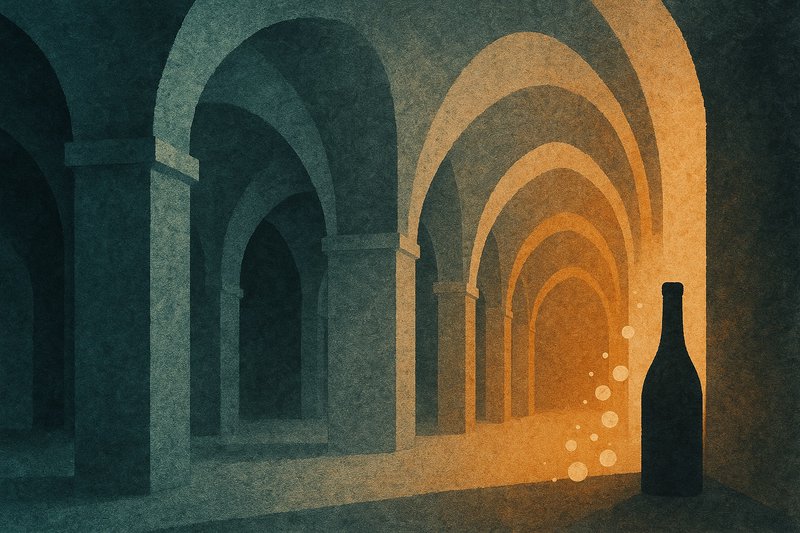
Fifty-five thousand square meters of cathedral-like chambers carved into Inkerman Mountain, where ancient stone quarries became Soviet sparkling wine cellars.
Sevastopol 🇷🇺

Château Tamagne doesn't sound like a Soviet-era winery brand—and that's the point.
Temryuk 🇷🇺


Prince Lev Golitsyn—the nobleman who introduced méthode champenoise to Russia—founded Massandra in 1894 to serve the tsars.
Yalta 🇷🇺
Founded in 1936 during Stalin's industrialization drive, Millstream survived what most Soviet-era projects couldn't: Nazi occupation of Crimea, Soviet recapture devastation, and decades of infrastructure chaos.
Sevastopol 🇷🇺
Founded in 1869 by Fyodor Geyduk—one year before Tsar Alexander II decreed Abrau-Durso's creation—Myskhako stands as Russia's third-oldest winery.
Novorossiysk 🇷🇺
Prince Lev Golitsyn didn't just introduce méthode champenoise to Russia—he chose Novyi Svet in 1878 to prove Crimean terroir could rival Champagne.
Sudak 🇷🇺
Red sparkling wine sounds like a marketing gimmick—unless you're in the Don Valley, where Cossacks have made it from Tsimlyansky Cherny grapes since the 18th century.
Tsimlyansk 🇷🇺
A single bottle sold for 750,000 rubles at auction—a record for Russian wine.
Konstantinovsk 🇷🇺


Russia's third-largest winery tripled China exports in 90 days—proving flexibility turns crisis into competitive advantage.

Moscow billionaire's $110M bet on overlooked terroir proved everyone wrong—achieving World's Best Vineyards Top 30 in 15 years.

Three generations, one imperial estate—Pavel Titov turned succession crisis into Eastern market triumph despite sanctions.

Vedernikov's indigenous varieties achieved Champagne-level recognition—750,000-ruble auction proving obscurity is advantage.

Andrey Artemov left L'Officiel Russia to build Walk of Shame—celebrating post-Soviet culture despite sanctions and barriers.
Type to search across all brands and founders